What this helps you do
Create tasks whose completions you can trust without being on site — because the instructions were concrete and the proof was named before the work started.Before you start
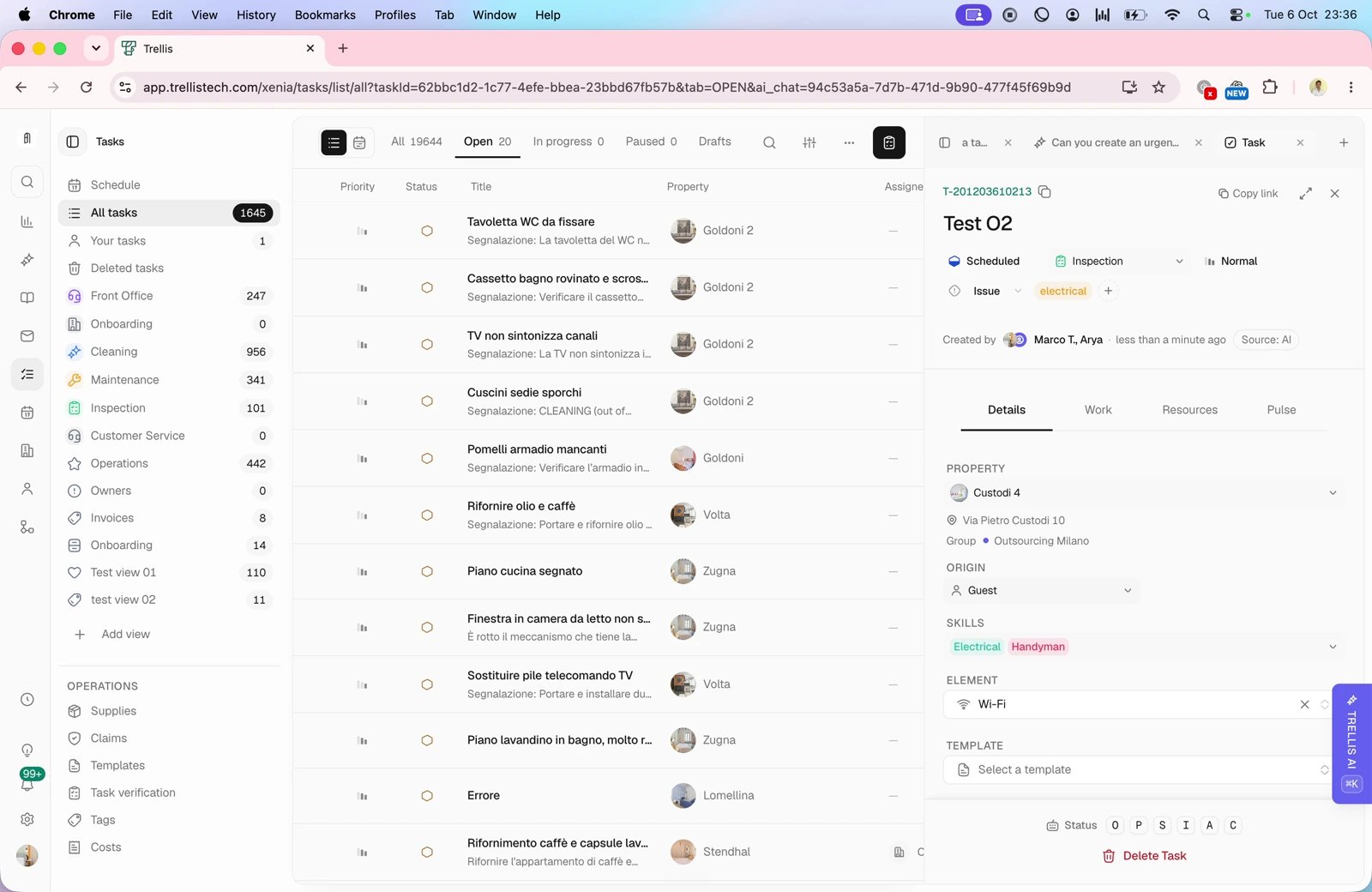
Know the property, the timing window, and what “done” looks like. A task missing any of the three bounces back with questions or, worse, comes back “complete” without being checkable.Create the task
1
Start from the right place
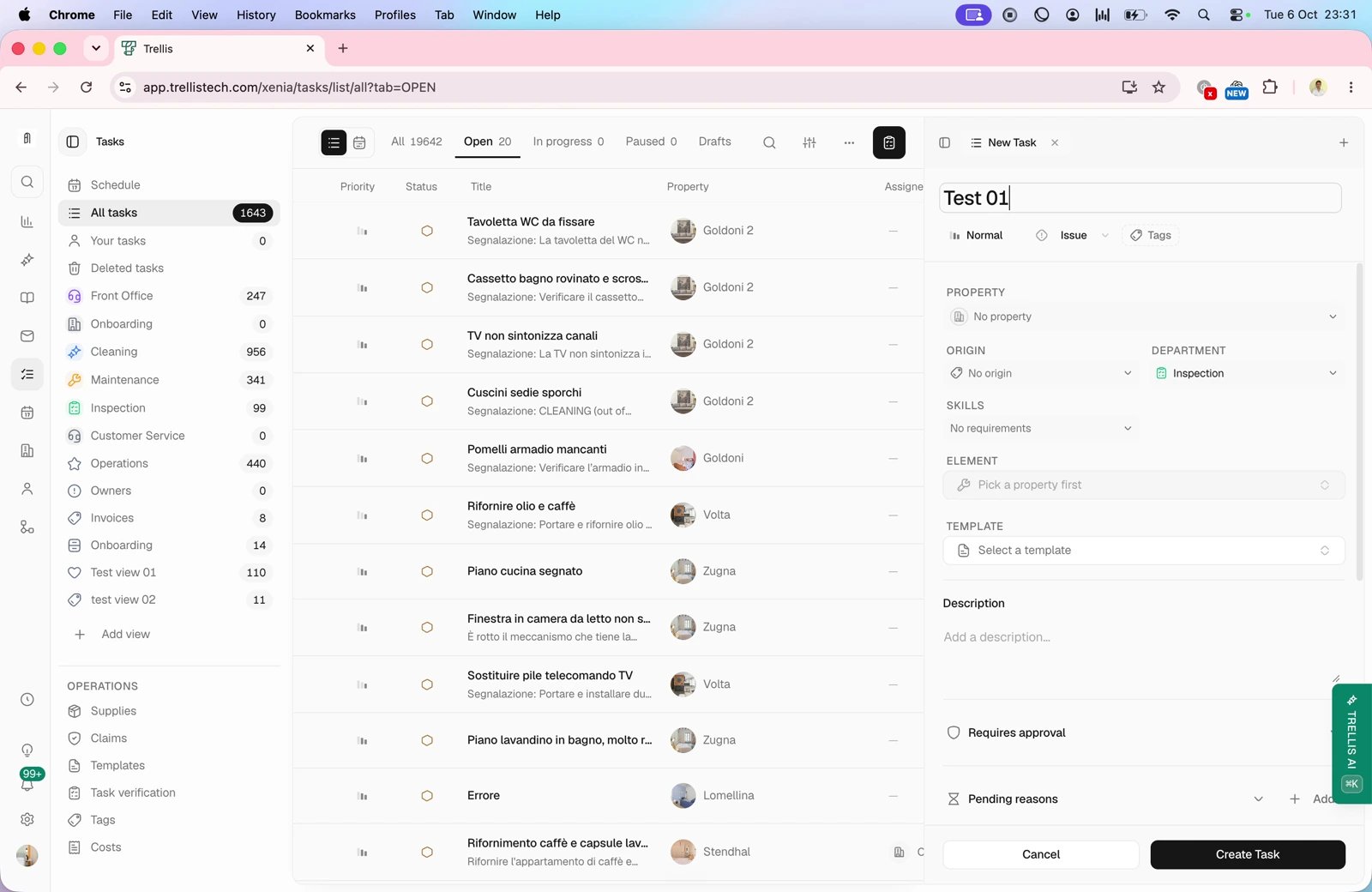
Use Create task from wherever the need surfaced — a conversation, a property, or the task
list directly. Starting from a conversation or reservation carries the property and stay context
with it.
2
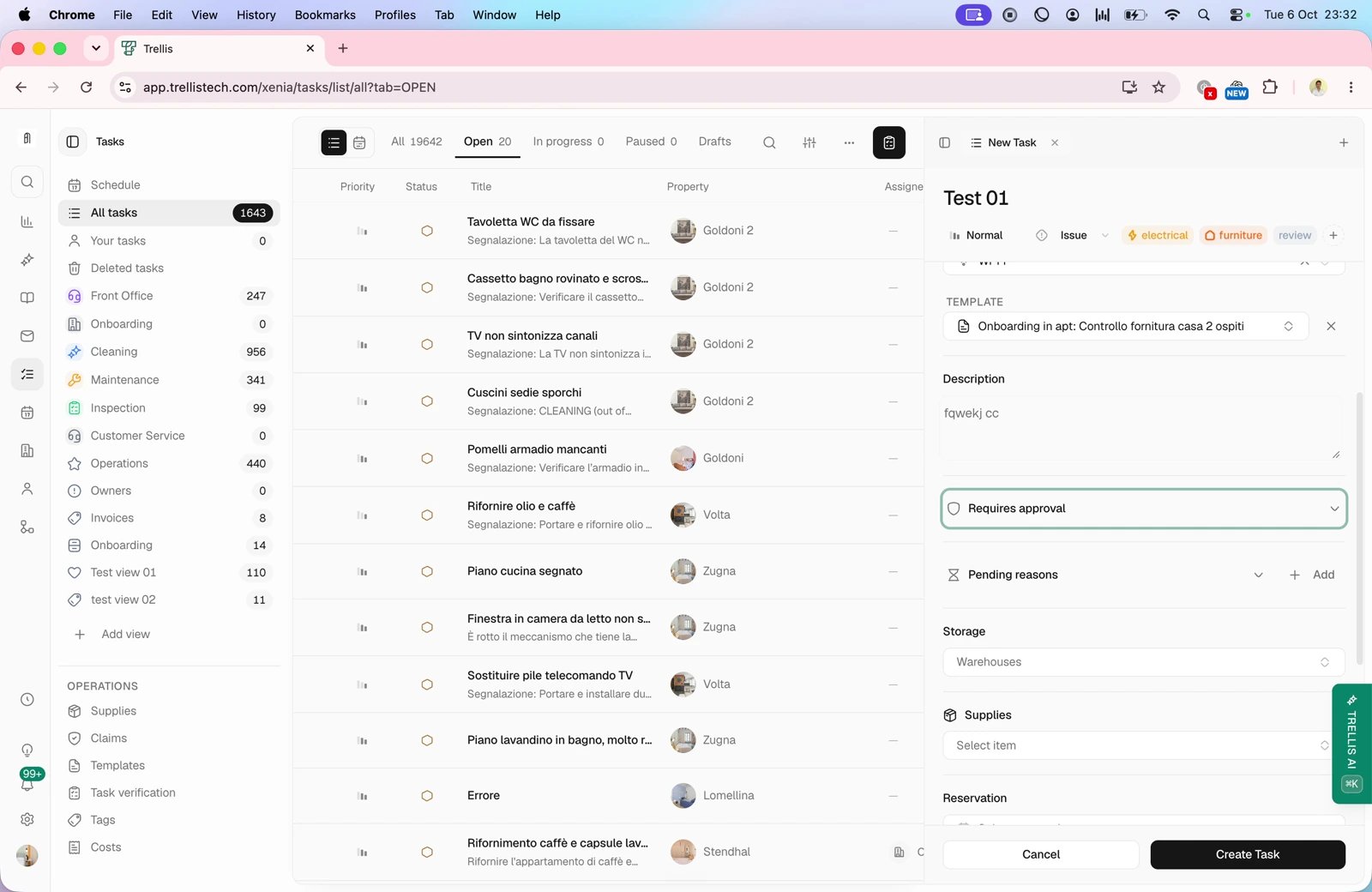
Write instructions for a stranger
Assume the worker has never seen this property. Name the exact area, the exact problem, and
anything they must know before starting. “Fix the lockbox” fails; “Front-door lockbox, code
wheel sticks on 3 — replace the unit in the garage cabinet” succeeds.
3
Use checklist items when order matters
A Checklist turns one vague task into verifiable parts, each checked off individually.
Sequence the items the way the work must happen.
4
Name the proof up front
Mark items Photo required where you need to see the result, and say in the instructions what
the photo must show. Proof named after completion is an argument; proof named before is a
requirement.
5
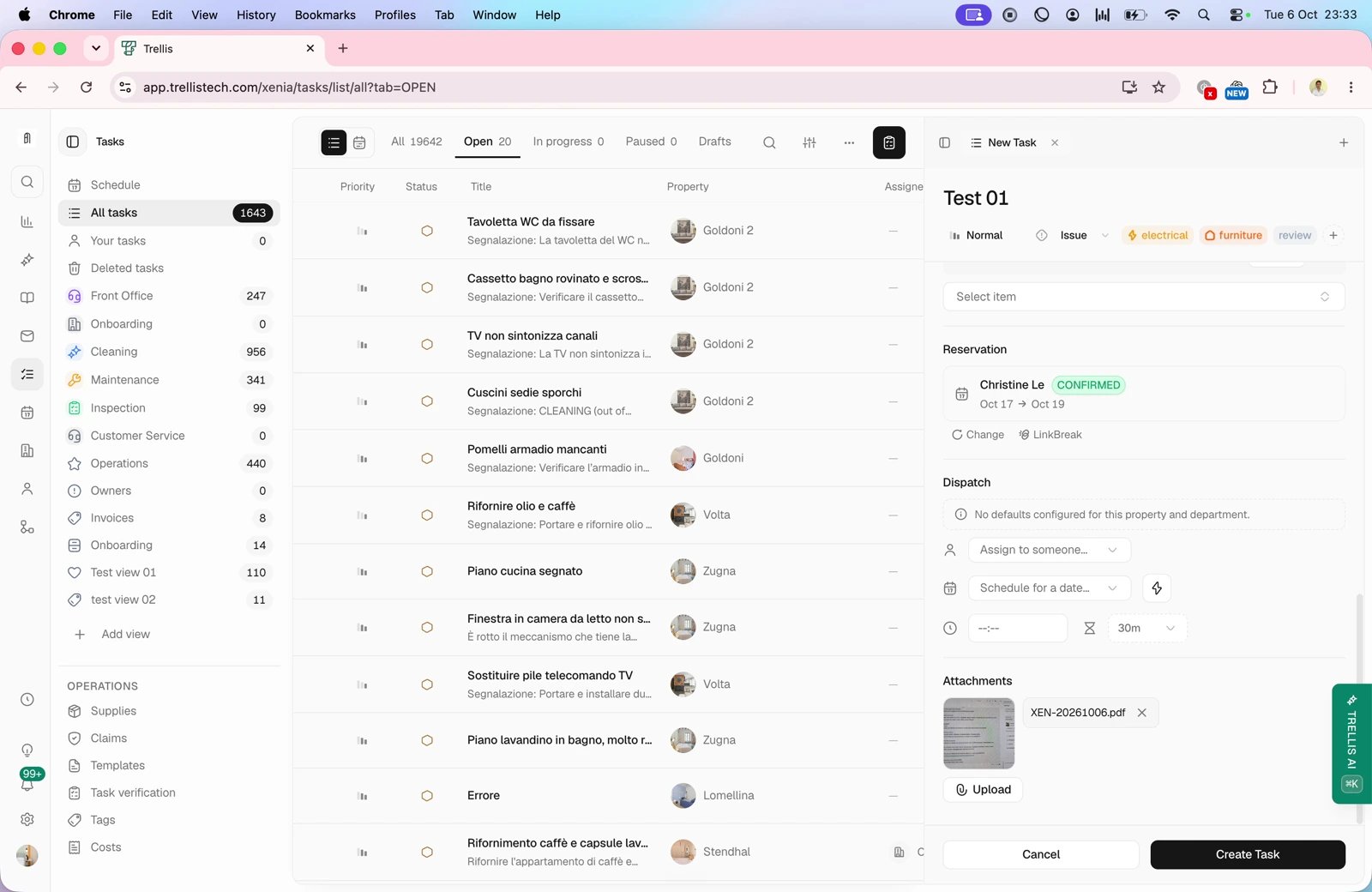
Schedule and assign
Give the task its date, timing window, and assignee. Unassigned or undated tasks are wishes, not
work.