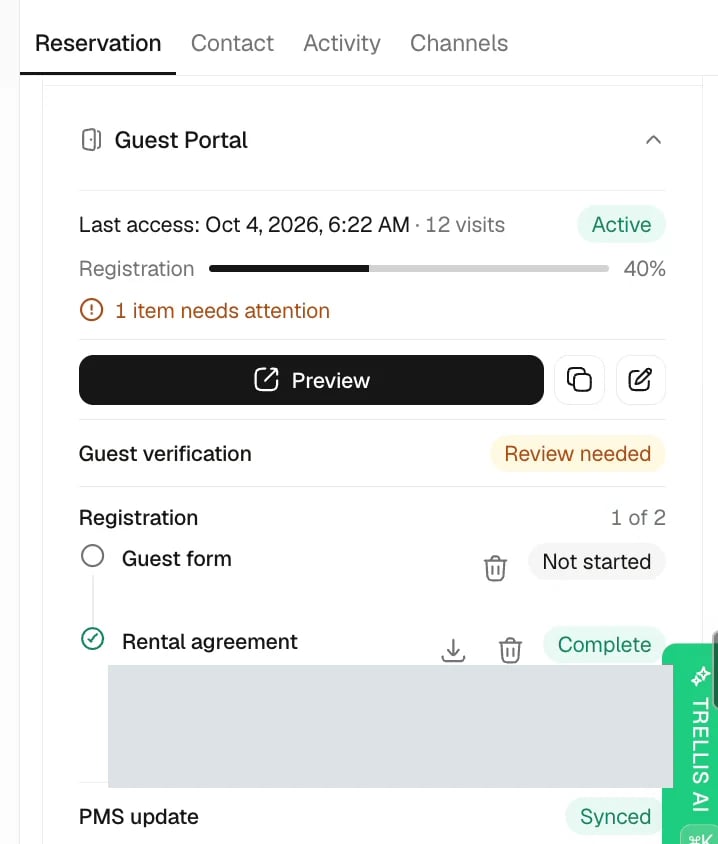
What this helps you do

Answer “which reservation?” — the first question behind almost any guest issue — and read the record correctly once you have it.

The status lifecycle

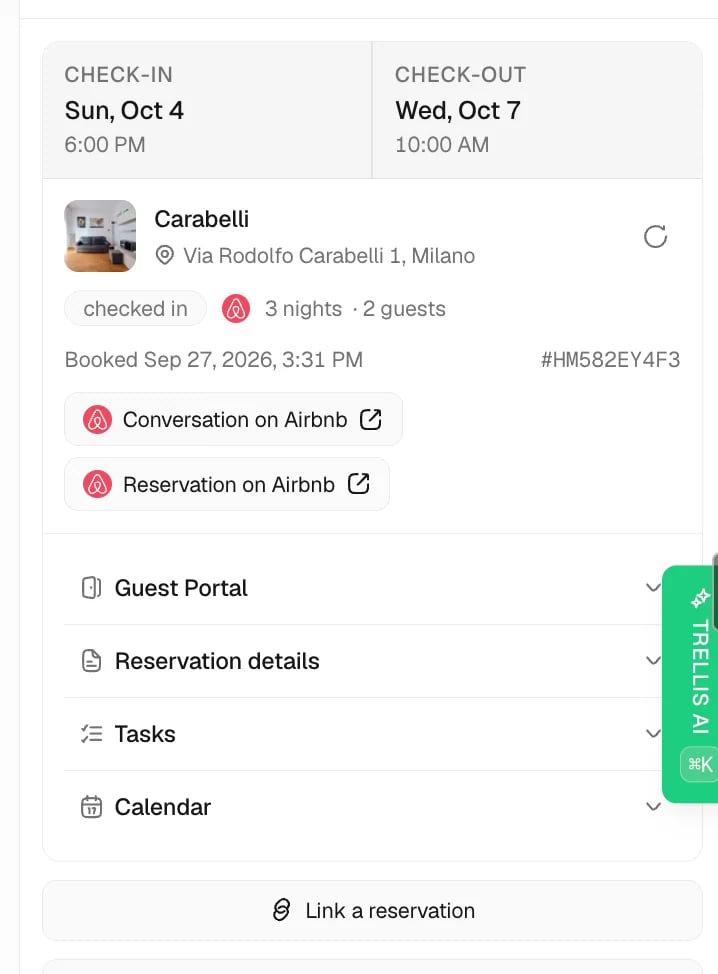
A reservation moves through a small set of statuses: Status answers most timing questions on its own: a “late checkout” request against a Checked Out reservation and one against an In Stay reservation are different conversations.

What hangs off the record

  • The guest contact. The person behind the stay, with their conversation history. One contact can hold many reservations across properties and years.
  • The property. The stay links to exactly one property, which is where cleaning, maintenance, and house details live.
  • The channel. Where the booking originated — a listing channel or a direct booking. Channel determines how guest messages travel and which policies came with the booking.
  • Connected work. Tasks and conversations created for this stay reference it, so the reservation is the hub for tracing what happened around a stay.

What your PMS owns versus Trellis

When a property management system is connected, it is the source of truth for the booking itself — dates, status, guest identity, and money sync from the PMS into Trellis. Work that happens around the stay — conversations, tasks, notes, AI activity — lives in Trellis. The practical rule: to change booking facts, change them in the PMS and let the sync carry them over; correcting them only in Trellis will not hold. For tracing and fixing wrong information wherever it lives, see Fix wrong AI information.