What this helps you do
Read operational work the way Trellis structures it — tasks inside visits — and review completions so “done” always means verifiably done.Task versus visit
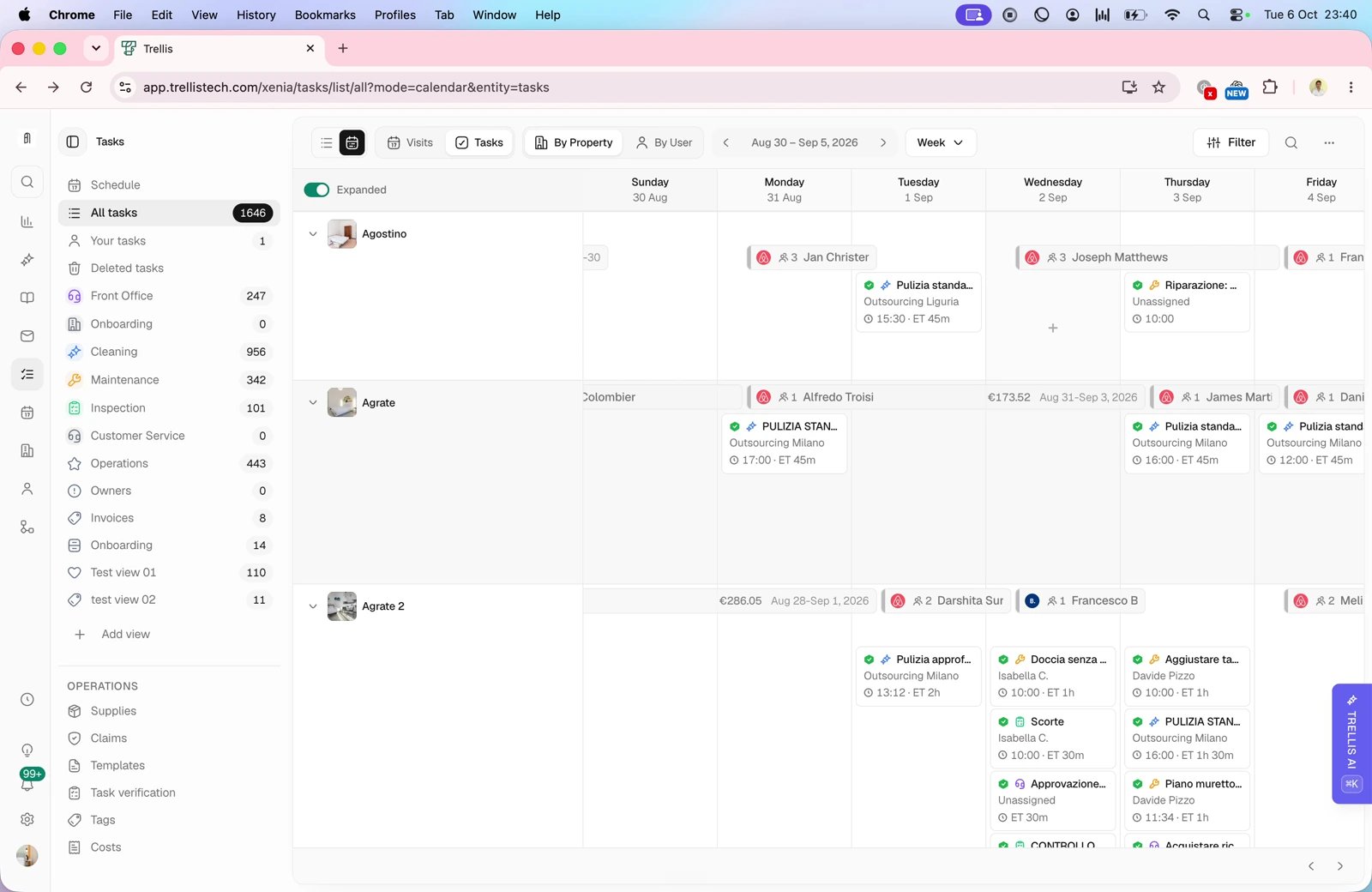
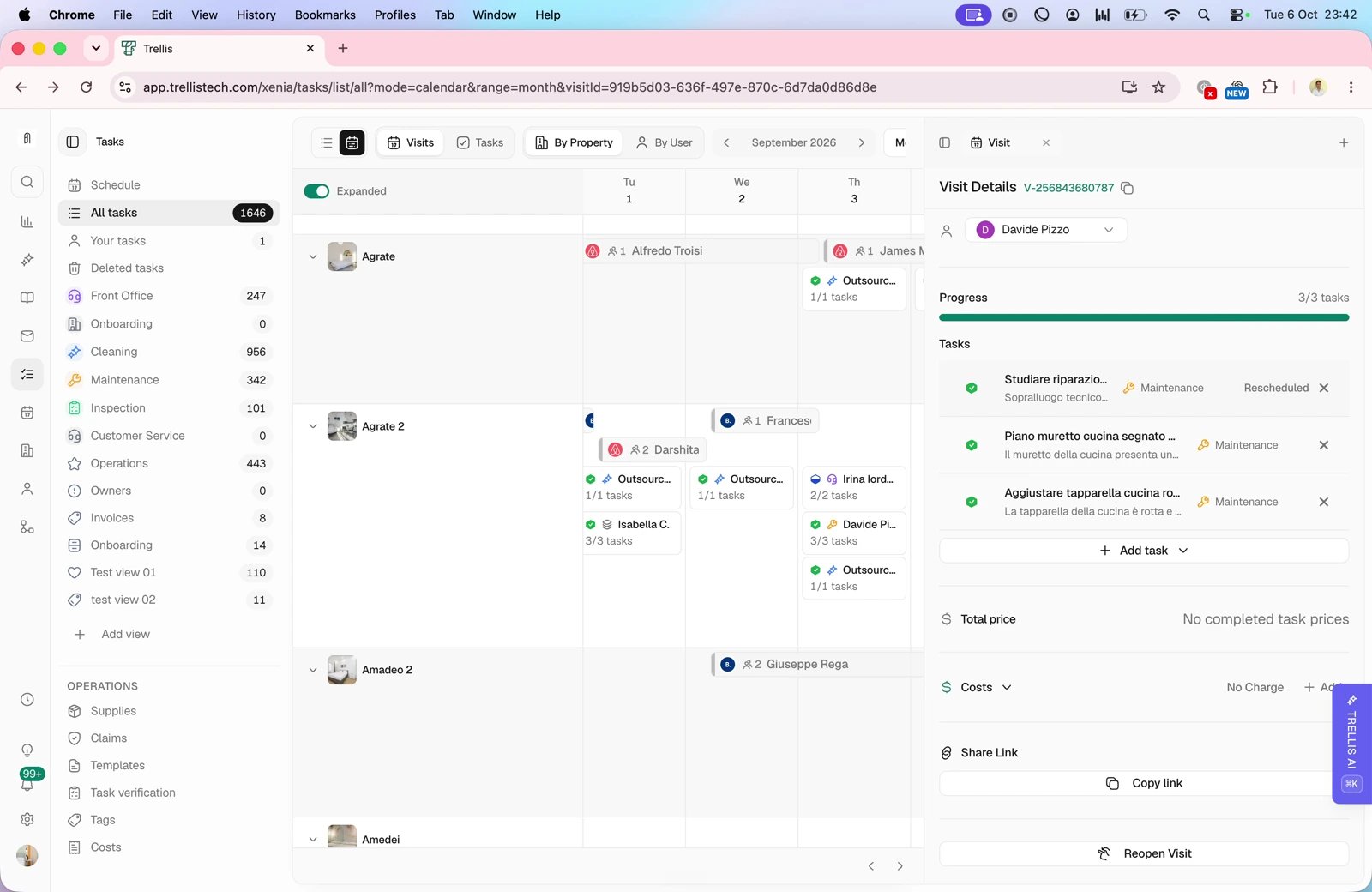
A task is one unit of work with its own instructions, checklist, and proof requirements: fix this lockbox, run this turnover clean. A Visit is a worker’s bundle of work at one property for one day. When a task is scheduled and assigned, it lands on a visit — the worker’s view of “what am I doing at this property today.” One visit can carry several tasks; one task always belongs to the property and timing that scheduled it. The distinction matters when reading status: a task that never got done may have failed on its own terms, or its visit may never have happened at all — different problems with different fixes. A missed visit is a scheduling or staffing issue; a failed task inside a completed visit is a work-quality issue.Review a completion
1
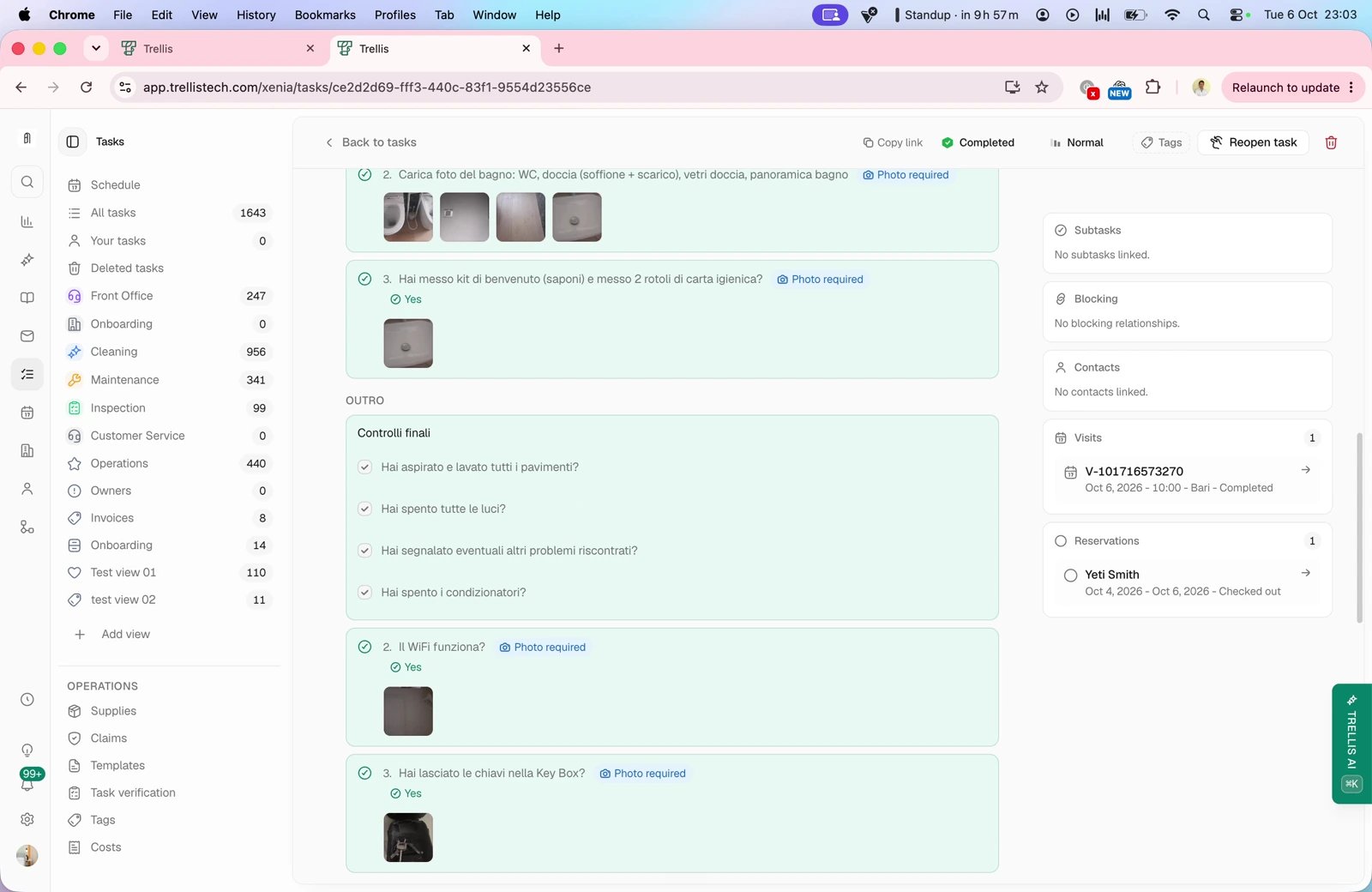
Compare proof against requirements
Open the completed task and put the attached evidence next to what was asked: every checklist
item checked, every Photo required item backed by a photo showing what the instructions
demanded.
2
Accept or decline with a reason
Accept when the evidence carries the completion. Decline when it does not — and say
specifically what is missing or wrong, so the redo is one trip instead of a guessing game.
3
Separate failed from never doable
Before declining, ask whether the task could have been done as written. Wrong code in the
instructions, a guest still in the unit, a part that does not exist — those are failures of the
task, not the worker. Fix the task and reschedule rather than declining the person who reported
honestly.